The Current Availability Landscape: Why You Can't Buy It Locally
The short answer for anyone searching for the Fitbit Air in local South African stores is that it is currently unavailable through authorized channels. As of late May 2026, the device is not listed at major retailers such as Takealot, iStore, Incredible Connection, HiFi Corp, Game, Makro, or carrier stores like Vodacom and MTN. This absence is not due to a temporary stockout but rather a strategic decision by Google. Following the acquisition of Fitbit, Google aligned regional availability with its Pixel smartphone ecosystem, formally withdrawing the Fitbit brand from 28 markets, including South Africa.
The Google Store, which was the primary global direct-to-consumer channel, does not ship to South African addresses. Furthermore, the regional selector on the official Fitbit website (now transitioning to Google Health) does not recognize South Africa as a supported storefront. This structural gap means that while the device launched in the United States on May 26, 2026, South African consumers cannot walk into a store or order directly from the manufacturer.
For international buyers who are determined to access this specific hardware, the solution often involves utilizing international shipping concierge services. These services allow customers to purchase the device from US retailers like Best Buy and have it shipped globally, bypassing the regional restrictions. However, for the average South African buyer, this necessitates a deep dive into the import process and the associated costs.
Navigating the Import Process: SARS Duties and Hidden Costs
For South Africans willing to bypass local unavailability, importing the Fitbit Air from the US is a viable but complex route. The device has an US MSRP of USD 99.99 (approximately R1,640 at current exchange rates), but the landed cost in South Africa will be significantly higher due to government taxes. Understanding the SARS (South African Revenue Service) import rules is critical before attempting a purchase via third-party forwarders.
Understanding the Tax Stack
When a package valued over R500 enters South Africa, it is subject to customs duties and VAT. Fitness trackers and smartwatches generally fall under HS chapters 84-85, which typically attract 0% ad valorem duty in practice. However, the VAT calculation is where the cost increases. SARS applies a 15% VAT on the customs value, which is defined as the transaction value plus a 10% uplift for non-SACU (Southern African Customs Union) imports.
The formula for a standard import looks like this:
- Customs Value: R1,640 (USD 99.99 converted)
- Uplift: R1,640 + 10% = R1,804
- VAT (15%): R1,804 x 0.15 = R270.60
This means the base tax liability is roughly R270, pushing the cost to around R1,910 before shipping fees. Most gray-market importers or concierge services will charge a service fee and shipping costs, which can push the final price to the R2,200–R2,500 range. Additionally, packages arriving via these channels do not carry the manufacturer's warranty, meaning a defective unit cannot be easily serviced in South Africa.
AVAILABLE FROM BIG APPLE BUDDY
Fitbit Air South Africa
We buy it in the U.S. and ship it to your door in 75+ countries.
BUY THIS NOW

Gray-Market Risks vs. Authorized Distribution
While you may occasionally see the Fitbit Air listed on third-party international marketplaces like Desertcart that ship to South Africa, these are not authorized sales channels. These platforms act as intermediaries, purchasing the device from US stock and forwarding it. The critical distinction for South African consumers is the warranty. Google/Fitbit's official warranty policy is region-specific, and because South Africa was removed from the official footprint, a US-purchased unit has no valid warranty coverage within the country.
If you purchase through a gray-market route, you are essentially self-insuring the device. If the tracker fails or the battery degrades prematurely, you would need to ship it back to the US for repair, incurring high shipping costs and potential customs delays. This stands in stark contrast to purchasing a device that is officially distributed in South Africa, where the retailer and the manufacturer both honor warranty claims.
The Warranty Reality
For most consumers, the risk of buying a gray-market device outweighs the benefit of owning a specific model. The lack of local support means that if the proprietary charging clip is damaged or the device malfunctions, there is no local repair network. This is a common issue with electronics imported via non-official channels in South Africa. The only warranty coverage you receive is typically the retailer's own 30-day return policy, which is insufficient for a long-term wearable device.
Local Alternatives: The Smart South African Consumer's Choice
Given the availability hurdles and import costs, the most pragmatic approach for South African buyers is to consider the robust local alternatives that are readily available with full warranties. The local market offers several high-quality fitness trackers that compete directly with the Fitbit Air's features, often at a lower total cost of ownership.
1. Samsung Galaxy Fit3
Currently the most accessible budget option, the Galaxy Fit3 is widely available at HiFi Corp and Takealot. Priced between R999 (on sale) and R1,299 (regular), it is significantly cheaper than the landed cost of a Fitbit Air. It features a 1.6-inch AMOLED display, 13-day battery life, and full integration with Samsung Health, along with a valid South African warranty.
2. Garmin Vivosmart 5
For users focused on serious fitness metrics, Garmin dominates the local market. The Vivosmart 5 is available on Takealot and Sportsmans Warehouse for around R1,799. It offers superior GPS connectivity, advanced recovery metrics, and the trusted Garmin Connect ecosystem, all backed by Garmin's local support network.
3. Apple Watch SE 2
For iPhone users, the Apple Watch SE 2 is the standard, available at iStore from R6,200. While expensive, it offers a full smartwatch experience with ECG and crash detection, which the screenless Fitbit Air cannot match.

Technical Compatibility and Usage in the South African Context
Assuming you manage to import the Fitbit Air, the technical setup in South Africa is straightforward. The device is region-agnostic and does not require a SIM card or cellular connection. It syncs entirely via Bluetooth to your smartphone, meaning it works perfectly on any South African network including Vodacom, MTN, Cell C, and Telkom. The Google Health app (formerly the Fitbit app) is available for download on both the Google Play Store and the Apple App Store, ensuring full functionality regardless of your carrier.
Power and Charging Considerations
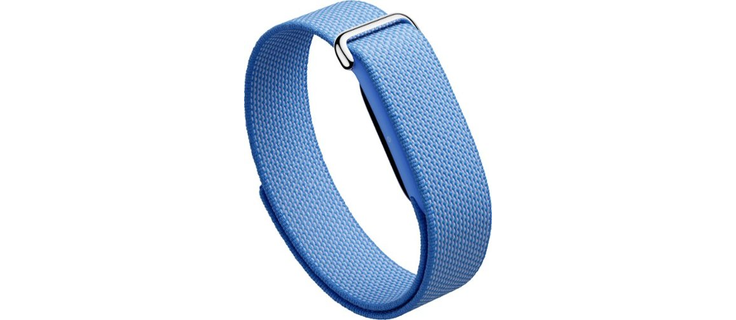
The Fitbit Air uses a proprietary magnetic charging clip that connects to a USB-C port on the host side. The device itself is compatible with USB-C power sources, which are ubiquitous in South Africa. However, the wall plug provided in the US box will be a Type A or B plug (two flat pins). You will need a simple travel adapter to fit South African Type M (large round pins) or Type N/D sockets. There are no voltage compatibility issues, as the charger is designed for 100-240V input.
It is important to note that the Fitbit Air does not support Google Pay tap-to-pay, as it lacks an NFC chip. This is a significant feature gap for South African users who rely on contactless payments. If payment functionality is a priority, users should look at the Fitbit Charge 6 (if available via import) or the Apple Watch SE, neither of which are standard Fitbit Air features.