The Core Conflict: Audio-First Design vs. AI-First Architecture
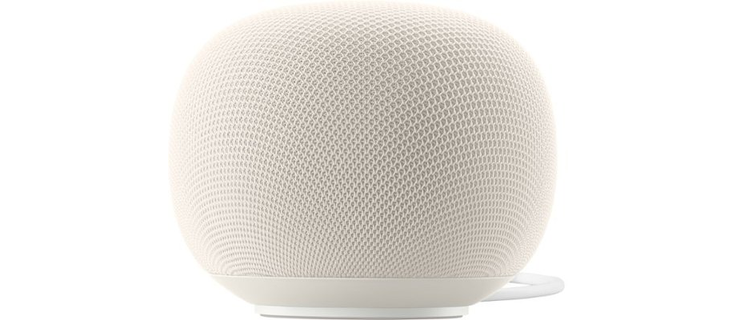
The debate between the Google Home Speaker (2026) and the Nest Audio (2020) represents a fundamental philosophical shift in Google's smart home strategy. While both devices launched at the same price point of $99.99, they were built for different eras. The Nest Audio was the culmination of Google's audio-first approach, prioritizing high-fidelity sound reproduction with a dedicated mid-woofer and tweeter. In contrast, the new Google Home Speaker is an AI-first device, engineered specifically to handle the computational demands of Gemini for Home and to serve as a central hub for a modern smart home ecosystem.
Hardware Disparity
From a pure hardware perspective, the Nest Audio retains the advantage for audiophiles. It features a 75mm mid-woofer paired with a 19mm tweeter, a configuration that delivers richer, more detailed sound across the frequency spectrum. The Google Home Speaker, conversely, relies on a single 58mm full-range driver. While Google markets this as having "2.5x stronger bass," this claim is benchmarked against the budget Nest Mini, not the Nest Audio. Independent reviews from outlets like Android Police and The Verge consistently place the Google Home Speaker's audio performance somewhere between the Nest Mini and the Nest Audio. If your primary use case is listening to music, the older Nest Audio remains the superior choice.
However, the Google Home Speaker compensates for its smaller driver with 360-degree sound dispersion. Unlike the Nest Audio, which projects sound directionally from the front, the Home Speaker fills the room from all angles. This makes it significantly more flexible in terms of placement; you can hide it in a corner or center it on a shelf without worrying about dead zones. This design choice signals that Google is no longer treating smart speakers as primary music players, but rather as ambient audio companions that prioritize voice interaction and room coverage over high-fidelity listening.
The Intelligence Gap: NPU Power and Gemini for Home
The most significant differentiator between these two devices is not the speaker cone, but the silicon inside. The Google Home Speaker is the first device purpose-built with an NPU (Neural Processing Unit) and a quad-core 2.0 GHz Cortex-A55 processor. This architecture is designed to run Gemini for Home locally and efficiently, enabling complex natural language understanding, mid-sentence corrections, and long-term conversational memory. The Nest Audio, running on a 2020-era platform, receives Gemini for Home as a software retrofit. While Google has confirmed that existing Nest Audio units will receive the Gemini update, they lack the dedicated hardware to process these commands as quickly or as intelligently as the new Home Speaker.
Microphone and Processing Advantages
The Google Home Speaker utilizes a specialized far-field microphone array tuned specifically for the new AI capabilities. This results in superior wake-word detection and voice command processing, even in noisy environments. The Nest Audio's microphone array, while capable, is not optimized for the same level of real-time, multi-turn conversation that the NPU facilitates. For users who rely heavily on the voice assistant for complex tasks—such as managing multi-step smart home routines or having extended natural conversations—the Google Home Speaker offers a distinctly more responsive and capable experience.
It is important to note that while the Nest Audio gets the software upgrade, it cannot match the hardware-native performance. The new speaker's ability to handle Gemini Live features, particularly if you opt for the Google Home Premium subscription, is where the gap widens. The NPU allows for faster processing of live, flowing conversations, whereas the older hardware may introduce latency or struggle with complex context switching. If you are a power user of the Google ecosystem, this processing power is a decisive factor.
AVAILABLE FROM BIG APPLE BUDDY
Google Home Speaker
We buy it in the U.S. and ship it to your door in 75+ countries.
BUY THIS NOW
Smart Home Hub Capabilities: Thread, Matter, and Ecosystem Lock-in
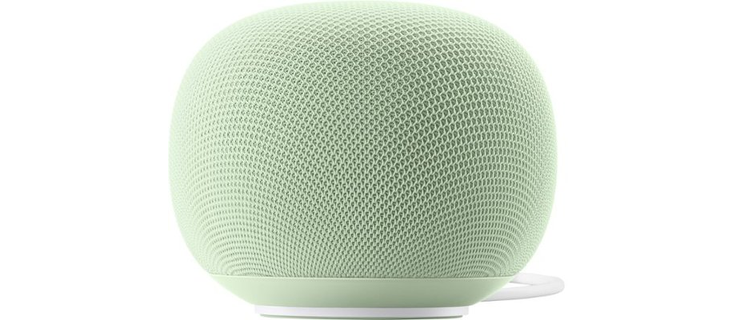
For smart home enthusiasts, the Google Home Speaker is not just a speaker; it is a gateway. It integrates a Thread 1.3 border router and a Matter controller directly into the chassis. This allows it to communicate natively with Thread and Matter-enabled devices like smart bulbs, locks, and sensors without needing a separate hub like a HomePod or a dedicated bridge. The Nest Audio lacks both of these technologies, meaning users with a modern smart home setup must rely on other devices or a separate hub to manage these connections. This makes the Google Home Speaker a far more future-proof investment for a connected home.
Stereo Pairing and Spatial Audio Restrictions
Perhaps the most controversial aspect of the comparison is Google's policy on stereo pairing. While the hardware of the Nest Audio is technically capable of stereo pairing with another Nest Audio, Google has software-gated this feature exclusively to the new Google Home Speaker. You cannot create a stereo pair between a Google Home Speaker and a Nest Audio. Similarly, the ability to pair two speakers with a Google TV Streamer for spatial surround sound is also restricted to the new Google Home Speaker. Google has admitted that this is a policy decision, not a hardware limitation, effectively forcing users who want the latest audio features to upgrade their entire ecosystem.
This creates a fragmented experience for existing Nest Audio owners. You can still group them for multi-room audio, but you lose the ability to create true stereo channels or surround sound setups with the new TV integration. If you are building a new multi-room system from scratch, the Google Home Speaker is the only viable option for these advanced audio configurations. For those upgrading, this policy effectively makes the Nest Audio a "legacy" device for advanced audio features, even though it remains a capable standalone speaker.
Value Proposition and Global Availability Considerations
When evaluating value, the landscape has shifted dramatically since the 2020 launch of the Nest Audio. As of mid-2026, the Nest Audio is discontinued, with production ended and retail inventory cleared. While existing units continue to receive software updates and security patches, they are no longer sold new by Google. This scarcity has created a unique situation for international buyers. In markets where the Google Home Speaker was not included in the initial 18-country launch (such as Germany, India, Singapore, and various Gulf states), the Nest Audio has become a gray-market commodity, sometimes selling for significantly more than the new Google Home Speaker's $99.99 price tag.
International Sourcing and Subscription Models
For buyers outside the US launch zone, the Google Home Speaker may not be available through local retail channels. However, services like Big Apple Buddy can facilitate the purchase of the new speaker from US retailers, shipping it globally with the appropriate voltage adapters. This is particularly relevant for users in the Gulf region or South Africa who previously relied on the Nest Audio but now find it unavailable or overpriced as a gray import. The Google Home Speaker's USB-C power adapter is 100-240V compatible, making it universally usable with a simple plug adapter.
Regarding the subscription model, the core functionality of both speakers remains free. The Gemini voice assistant is free for natural conversation, multi-command requests, and basic smart home control. The $10/month Google Home Premium tier gates advanced features like Gemini Live (free-flowing conversation), Camera History Search, and Home Briefs. However, buyers of the Google Home Speaker before September 30, 2026, receive 6 months of Premium bundled with the device. This makes the new speaker an even more attractive value proposition for those interested in the full Gemini experience, whereas the discontinued Nest Audio offers no such hardware-included premium trial.