The Availability Gap: Why SteamOS Legion Go S is Absent from Japanese Shelves
The Lenovo Legion Go S (SteamOS variant) represents a significant milestone as the world's first officially Valve-licensed third-party handheld, yet for buyers in Japan, the path to ownership is strictly international. The specific Best Buy parent SKU 71463697 covers the high-end configuration featuring the AMD Ryzen Z1 Extreme processor, 32GB of LPDDR5X RAM, and a 1TB PCIe Gen4 SSD in Glacier White. While this specific unit retails for $899.99 in the United States, it is completely absent from the Japanese domestic market. Lenovo Japan's official product pages and major electronics retailers—including Yodobashi, Bic Camera, TSUKUMO, and K's Denki—list only the Windows 11 Home variant (Model 83L3004TJP) equipped with the lower-spec Ryzen Z2 Go, 16GB RAM, and 512GB SSD.
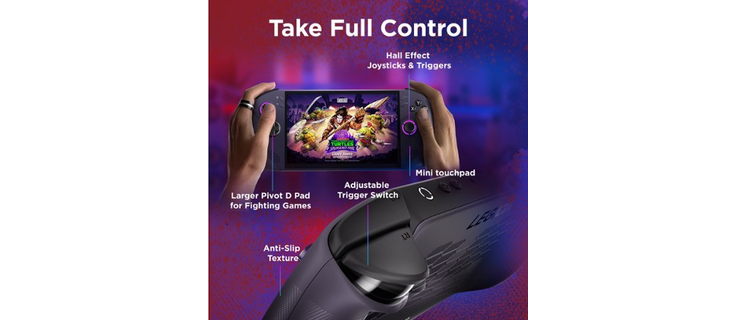
This discrepancy creates a unique situation where the SteamOS experience, which offers a native suspend/resume feature and a console-like interface, cannot be purchased locally. The SteamOS edition exists only in the US retail channel and select international markets. For Japanese consumers, this means that if the SteamOS operating system is a non-negotiable requirement, the domestic Lenovo storefront offers the wrong product entirely. The Windows-only model found in Japan lacks the specific SteamOS optimizations and the Valve licensing that defines the 71463697 SKU.
Consequently, the only viable route for a Japanese buyer seeking the SteamOS Legion Go S is through parallel import. This involves sourcing the device from US retailers like Best Buy and utilizing a specialized shipping service to handle the cross-border logistics. This is not merely a matter of convenience but a necessity to access the correct hardware configuration and operating system that Lenovo Japan has chosen not to distribute locally.
Navigating 2026 Customs Regulations: Duty, Tax, and the End of the 60% Rule
For the Japanese buyer, the financial calculation for importing the Lenovo Legion Go S has shifted dramatically due to regulatory changes effective January 1, 2026. Historically, personal-use imports benefited from a '60% of overseas retail price' valuation rule, which effectively raised the duty-free threshold. However, this legacy rule has been abolished, and Japan Customs now assesses all goods on 100% of their CIF (Cost, Insurance, and Freight) value. This means the previous tax loopholes are closed, and importers must pay the full Japan Consumption Tax (JCT) on the landed cost of the device.
On the positive side, the tariff classification for handheld gaming PCs falls under HS 8471.30 (portable data-processing machines), which carries a 0% MFN duty rate. Therefore, the primary financial impact is the 10% Japan Consumption Tax applied to the total value. Given the $899.99 US price point, plus shipping and insurance, the landed cost will likely place the device well above the 10,000 yen de minimis threshold, triggering full tax liability.
When calculating the total cost of ownership, buyers must account for the following expenses:
- Base Price: $899.99 USD for the Z1 Extreme/32GB/1TB model.
- Shipping & Insurance: Estimated $30-$50 depending on the carrier and speed.
- Japan Consumption Tax: 10% of the total CIF value.
- Service Fees: Any customs clearance or handling fees charged by the forwarding service.
With the exchange rate fluctuating, a landed cost estimate of roughly ¥140,000 to ¥155,000 is realistic for the US-imported SteamOS unit. This is significantly higher than the domestic Windows model, which retails for approximately ¥99,880 in Japan. The price premium is the cost of accessing the SteamOS operating system and the superior hardware specifications (32GB RAM and Z1 Extreme CPU) that are simply not available in the Japanese domestic lineup.
AVAILABLE FROM BIG APPLE BUDDY
Lenovo Legion Go S SteamOS
We buy it in the U.S. and ship it to your door in 75+ countries.
BUY THIS NOW
Hardware Compatibility: Power Standards and the PSE Mark Nuance
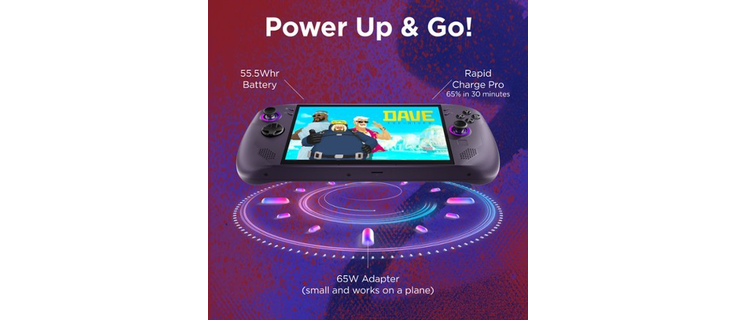
One of the most common concerns for international importers is whether the hardware will function correctly in Japan. The good news is that the Lenovo Legion Go S is designed with global power standards in mind. The bundled 65W USB-C charger is a universal-voltage unit, rated for 100-240V and 50-60Hz. This means it is fully compatible with Japan's 100V mains electricity without the need for a bulky step-up or step-down transformer. The physical plug on the US charger is a Type A two-prong design, which fits directly into standard Japanese Type A outlets.
However, there is a regulatory distinction regarding the PSE Mark (Product Safety of Electrical Appliance & Materials). Under Japan's DENAN Act, AC adapters distributed or sold within Japan must bear the PSE certification mark. The charger included with the US-bought Legion Go S lacks this mark. For a personal user importing the device for their own use, this is not a legal barrier. The device is safe to use, and the lack of a PSE mark only prohibits the resale or commercial distribution of the charger in Japan. If you intend to keep the device for personal gaming, the USB-C charger will function perfectly.
It is important to note that while the charger works, the warranty situation is strictly territorial. Lenovo's warranty is country-of-purchase specific. A unit bought from Best Buy in the US is covered by the US Lenovo warranty, not the Japanese warranty. While Lenovo Japan maintains a support FAQ for the SteamOS variant, they will not honor warranty claims for a US-purchased unit. Buyers must rely on the US warranty claim process or the return window of the retailer (Best Buy) if the device arrives defective.
Comparing Options: SteamOS Import vs. Domestic Windows Alternatives
For the Japanese consumer, the decision to import the SteamOS Legion Go S involves a trade-off between operating system preference, hardware performance, and warranty security. The domestic market offers the Windows 11 Legion Go S (Model 83L3004TJP) and competing devices from ASUS and MSI, but none of these offer the SteamOS experience. The following comparison highlights the critical differences for a buyer weighing their options:
| Feature | Imported Legion Go S (SteamOS) | Domestic Legion Go S (Windows) | Steam Deck OLED (Domestic) |
|---|---|---|---|
| Operating System | SteamOS 3.7 (Valve Licensed) | Windows 11 Home | SteamOS 3.7 (Valve Licensed) |
| Processor | AMD Ryzen Z1 Extreme | AMD Ryzen Z2 Go | AMD Custom APU |
| RAM | 32GB LPDDR5X | 16GB LPDDR5X | 16GB LPDDR5 |
| Display | 8-inch 120Hz LCD | 8-inch 120Hz LCD | 7.4-inch 90Hz OLED |
| Availability | US Import Only | Available in Japan | Available in Japan |
| Warranty | US Warranty Only | Japan Warranty | Japan Warranty |
| Approx. Price | ¥140,000 - ¥155,000 (Landed) | ¥99,880 | ¥99,800 - ¥114,800 |
The Steam Deck OLED remains the most cost-effective SteamOS option in Japan, distributed officially by Komodo. However, it lacks the 8-inch 120Hz display and the raw 32GB RAM performance of the Legion Go S. If the buyer prioritizes the native SteamOS interface and the high-end Z1 Extreme performance, the imported Legion Go S is the only choice. For those who prefer a domestic warranty and the Windows ecosystem, the local Legion Go S or the ASUS ROG Ally series are the logical choices, though they come with the compromises of Windows on a handheld and lower RAM configurations.
The Import Process: How to Secure a SteamOS Unit from the US
Securing the SteamOS Legion Go S in Japan requires a structured approach to bypass the lack of domestic availability. Since the device is not sold through any Japanese retail channel, the process involves purchasing from a US retailer and utilizing a specialized import service. This is where services like Big Apple Buddy become essential, as they bridge the gap between US retail channels and Japanese consumers. They handle the entire lifecycle of the purchase, from sourcing the item from Best Buy to managing the complex customs clearance required for high-value electronics.
The typical workflow for a successful import involves several critical steps that ensure compliance and delivery:
- Selection and Purchase: The item is purchased from Best Buy using the specific SKU 71463697. The service provider manages the payment and ensures the correct configuration is ordered.
- US Shipping: The device is shipped from the US retailer to the provider's US warehouse. This step often includes tax planning to minimize sales tax liabilities where possible.
- International Freight: The device is air-freighted to Japan. The service provider calculates the CIF value accurately to ensure the correct tax assessment.
- Customs Clearance: The provider acts as the importer of record or facilitates the clearance, paying the 10% Japan Consumption Tax on the CIF value. With the 2026 rule changes, this step is mandatory and cannot be bypassed.
- Last-Mile Delivery: Once cleared, the device is handed over to a local carrier like Japan Post, Yamato, or Sagawa for delivery to the buyer's doorstep.
This integrated approach eliminates the need for the buyer to navigate US sales tax, international shipping forms, and complex Japanese customs declarations alone. It provides a reliable path to owning a device that simply does not exist in the local market.