Understanding the Supply Gap for Saudi Buyers
For individuals in Saudi Arabia managing celiac disease or non-celiac gluten sensitivity, the NIMA Gluten Sensor has become a critical tool for dining out and managing pantry staples. However, a significant barrier exists: NIMA Partners, the manufacturer, restricts direct shipments to the United States, Canada, and Singapore. This geographic limitation means that residents of the Kingdom cannot simply place an order on the official brand website and expect delivery to their doorstep in Riyadh, Jeddah, or Dammam.
The absence of an authorized regional distributor or local stockists on major Saudi platforms like Amazon.sa, Noon, iHerb, Nahdi, or Al-Dawaa creates a supply vacuum. As of October 2026, no verifiable listings exist for the capsules in local inventory. This forces Saudi consumers to rely on international cross-border purchasing methods. While some third-party aggregators may appear in search results, their stock levels and pricing are often unstable or subject to bot challenges that prevent reliable purchasing.
The Role of International Freight Forwarding
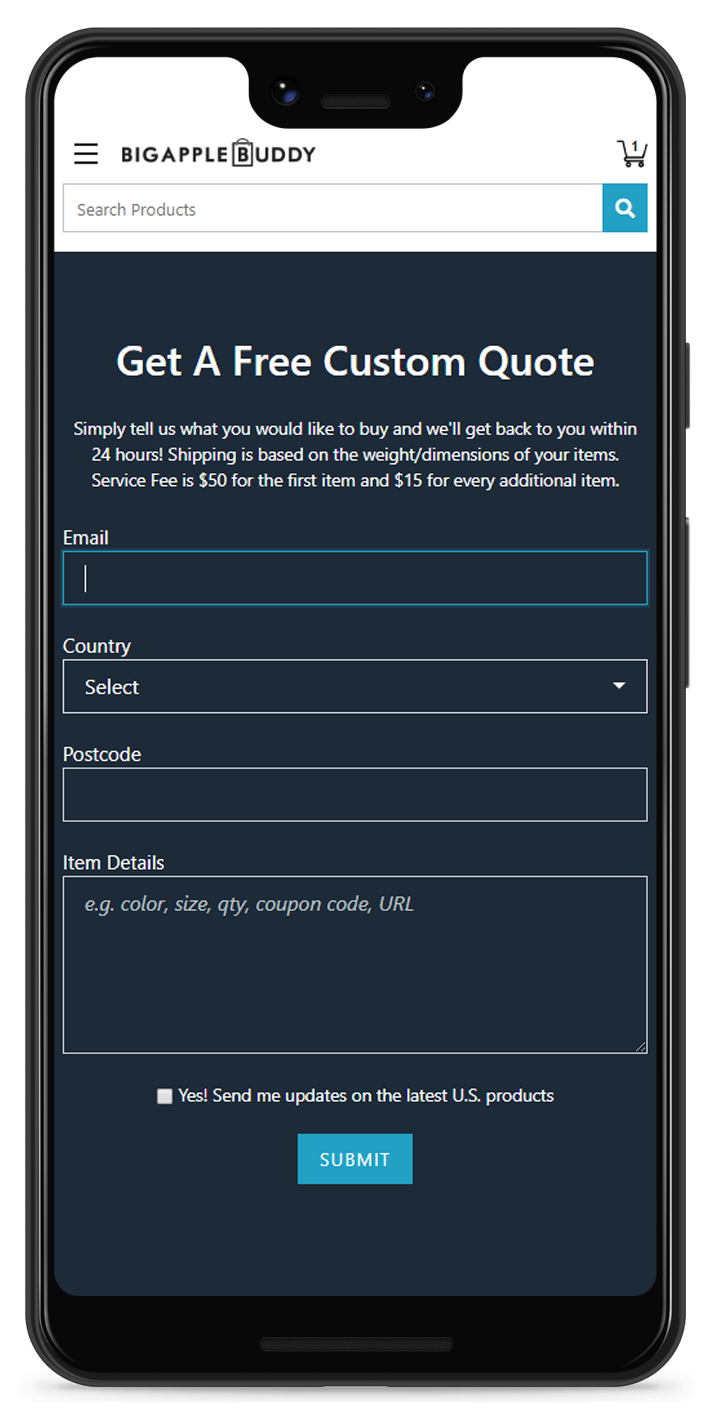
Given these restrictions, the most reliable method for Saudi residents to acquire Nima Gluten Capsules is through international freight forwarding services. These services provide a US-based address where the product is purchased, then consolidated and shipped to the buyer's location in Saudi Arabia. Services such as Big Apple Buddy specialize in this exact workflow, allowing international customers to access US-only retailers. By utilizing a forwarder, Saudi buyers can bypass the manufacturer's geo-blocking, though they must navigate additional layers of logistics, including international shipping costs and customs clearance procedures.
Cost Breakdown: From USD List Price to SAR Final Cost
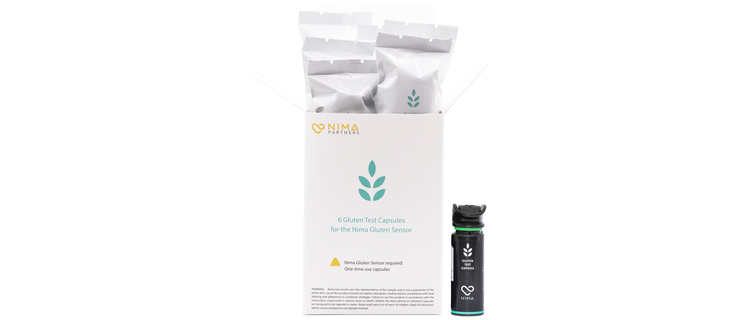
Understanding the true cost of Nima Gluten Capsules in Saudi Arabia requires more than just converting the US dollar price. The base price is just the starting point. A 6-pack of capsules lists at $72.00 USD on the NIMA store. Using the fixed Saudi Riyal peg of 3.75 SAR to 1 USD, this translates to SAR 270.00. However, the final landed cost will be significantly higher due to shipping, insurance, and government levies.
Customs Duty Thresholds
Saudi Arabia’s Zakat, Tax and Customs Authority (ZATCA) has specific rules for e-store imports. For individual shipments where the total value (goods + shipping + insurance) is under SAR 1,000, no customs duty is applied. This is a crucial advantage for buyers, as the general GCC customs duty rate is 5 percent. Therefore, if you order one or even two 6-packs, you likely avoid the 5 percent duty entirely.
VAT and Processing Fees
While duty may be waived, Value Added Tax (VAT) is non-negotiable. A 15 percent VAT applies to all imported goods, regardless of value. Additionally, a fixed customs processing fee of SAR 15 applies to individual e-store shipments under SAR 1,000. To illustrate, a single 6-pack (SAR 270) plus shipping and the SAR 15 fee will incur 15 percent VAT on the total. This structure means that while the product is accessible, the per-unit cost rises significantly when factoring in the logistics of international transport and mandatory taxation.
AVAILABLE FROM BIG APPLE BUDDY
Nima Gluten Capsules
We buy it in the U.S. and ship it to your door in 75+ countries.
BUY THIS NOW
Navigating SFDA Regulations and Import Compliance
Importing health-related devices and testing kits into Saudi Arabia involves navigating the regulatory framework established by the Saudi Food and Drug Authority (SFDA). While Nima Gluten Capsules are technically food-testing reagents rather than medical devices for in-vivo diagnosis, the line can appear blurred to customs officials. The SFDA guidance document MDS-G15 outlines rules for personal imports of medical devices, requiring written approval for such items.
However, NIMA’s capsules test food samples, not human blood or tissue. This distinction is vital. There is no public SFDA ruling explicitly classifying the NIMA capsule as a regulated medical device requiring prior import licenses for personal use. Consequently, most personal orders enter the country under the general 'personal use' framework. Buyers should be prepared to provide their National ID or Iqama number to customs, as ZATCA requires this for e-store shipments. Keeping the original packaging and proof of purchase is essential to demonstrate that the items are for personal dietary management rather than commercial resale.
Storage and Shelf Life Considerations
Once the capsules clear customs, storage becomes a regulatory and practical concern. The capsules have a shelf life of approximately 12 months from manufacture and must be stored between 32°F and 90°F (0°C to 32°C). Given Saudi Arabia’s extreme summer temperatures, ensuring the capsules remain within this range during the final mile delivery and storage at home is critical. Buyers should request that forwarders use expedited shipping to minimize exposure to heat in transit vehicles and warehouses.
Comparative Analysis: Nima vs. Alternative Testing Methods
For Saudi consumers who find the logistical hurdles of importing Nima Capsules too burdensome, it is worth comparing them to alternative gluten testing methods available on the global market. While Nima offers speed and digital integration, other methods offer different trade-offs in terms of convenience, cost, and detection thresholds.
| Feature | Nima Gluten Capsules | GlutenTox Home | EZ Gluten |
|---|---|---|---|
| Format | Capsule + Sensor Reader | Lateral Flow Strip | ELISA Test Kit |
| Test Time | ~3 Minutes | 10-20 Minutes | ~15 Minutes |
| Detection Threshold | 10 ppm | 5 ppm or 20 ppm | 10 ppm |
| Hardware Needed | Yes (NIMA Sensor) | No | No |
| Reusability | Sensor is reusable | Disposable | Disposable |
| Saudi Availability | Import Only | Import Only | Import Only |
The Nima system’s primary advantage is the reusability of the sensor, which lowers the long-term cost per test. However, the initial outlay of $220 for the sensor is high. Alternatives like GlutenTox Home or EZ Gluten require no hardware purchase but often take longer to process and lack the digital logging capabilities of the NIMA app. For Saudi buyers, the decision often hinges on whether the convenience of a reusable sensor justifies the complexity of international shipping.

Practical Steps for Ordering and Receiving Capsules
Successfully acquiring Nima Gluten Capsules in Saudi Arabia requires a strategic approach to ordering and logistics. Because the manufacturer does not support direct international shipping, buyers must orchestrate the purchase through a third-party intermediary. Here is a step-by-step guide to ensuring a smooth acquisition process.
- Choose a Reliable Forwarder: Select a service like Big Apple Buddy that has a proven track record of shipping health and wellness items to Saudi Arabia. Verify that they can handle small, temperature-sensitive parcels.
- Calculate Order Size: To avoid customs duties, keep the total declared value under SAR 1,000. A single 6-pack is well within this limit. If you need more, consider splitting orders or ensuring the total with shipping remains below the threshold.
- Prepare Documentation: Ensure you have your Saudi National ID or Iqama number ready. Customs may request this information for clearance. Keep the digital receipt from the US store to prove the value of the goods.
- Monitor Shipping Temperature: Request that the forwarder uses expedited shipping. Upon arrival, bring the package indoors immediately to prevent heat damage to the capsules.
- Check Expiry Dates: Upon receipt, check the manufacturing date on the capsule box. Since shelf life is 12 months, ensure you have enough time to use them before they expire.
By following these steps, Saudi residents can maintain a steady supply of gluten testing capsules, ensuring they can confidently manage their dietary needs despite the lack of local retail availability.