Introduction: Redefining Portable Gaming Displays
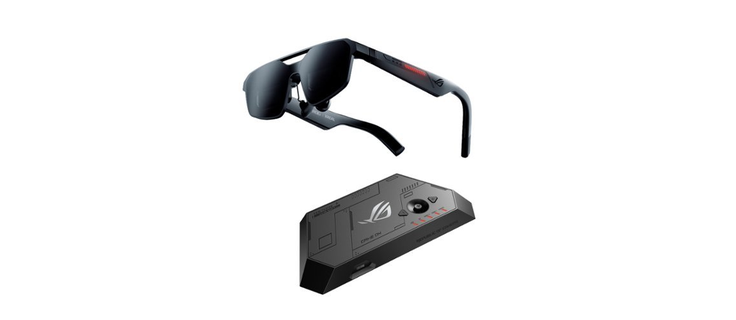
The landscape of portable gaming and augmented reality has shifted dramatically with the announcement of the ROG XREAL R1. Co-branded by ASUS Republic of Gamers (ROG) and XREAL, this device represents a significant leap forward in what wearable displays can achieve. Announced on May 15, 2026, and scheduled for global shipping starting June 1, 2026, the R1 is not merely a refresh of existing smart glasses; it is marketed as the world's first 240Hz AR gaming glasses. This distinction is critical for gamers who demand fluid motion and zero latency, features that have historically been the domain of heavy, standalone VR headsets rather than sleek wearable optics.
The R1 is designed to project a massive 171-inch virtual Micro-OLED display at a virtual distance of 4 meters. This creates the illusion of a cinema-sized screen without requiring the user to find a physical wall or monitor. Weighing in at a mere 3.2 ounces, the device offers a form factor that is barely noticeable on the face, allowing for extended gaming sessions on planes, trains, or in shared living spaces without the claustrophobia associated with traditional VR headsets.
While the device is tethered to a host computer or console, its performance metrics challenge the boundaries of what is possible with a lightweight display layer. By leveraging dual Sony 0.55-inch Micro-OLED panels, the R1 delivers a resolution of 1920×1080 per eye with a refresh rate of 240Hz and an incredibly fast 0.01ms response time. These specifications are not just marketing numbers; they translate to a visual experience that rivals high-end desktop monitors while offering the portability of a pair of sunglasses. For international gamers in regions like the UAE, Canada, Australia, and Italy, the R1 offers a unique opportunity to own a piece of cutting-edge hardware that bridges the gap between handheld PC gaming and immersive console experiences.
Visual Fidelity: The Micro-OLED Advantage
The core of the ROG XREAL R1's appeal lies in its optical engine, which utilizes dual Sony 0.55-inch Micro-OLED panels. Unlike the LCD or standard OLED panels found in many competing devices, Micro-OLED technology offers superior contrast ratios and pixel density. Each eye receives a full 1920×1080 resolution, ensuring that text is crisp and game textures are detailed even at the virtual 4-meter distance. The display covers 106% of the sRGB color gamut, providing vibrant, accurate colors that are essential for modern gaming titles and media consumption.
Field of View and Dimming Technology
One of the most innovative features of the R1 is its 57° field of view (FOV). XREAL claims this covers roughly 95% of the wearer's focused vision, creating an immersive experience that feels natural rather than like looking through a tunnel. To manage ambient light, the R1 employs a three-stage electrochromic lens dimming system. This replaces the static plastic shades found on entry-level glasses, allowing the wearer to toggle ambient transparency on the fly. Whether you need to see your coffee cup while playing or want total immersion in a dark room, the R1 adapts instantly.
Performance Metrics
The combination of a 240Hz refresh rate and a 0.01ms response time is a game-changer for fast-paced genres. In competitive shooters or racing simulators, the difference between 60Hz and 240Hz is profound. The rapid refresh rate eliminates motion blur, while the near-instant response time ensures that inputs are translated to the screen with zero perceptible lag. This makes the R1 particularly suitable for users who have already invested in high-refresh-rate desktop setups and want to replicate that experience on the go.
AVAILABLE FROM BIG APPLE BUDDY
ROG XREAL R1
We buy it in the U.S. and ship it to your door in 75+ countries.
BUY THIS NOW
Audio and Connectivity: The Complete Ecosystem
Visuals are only half the story. The ROG XREAL R1 integrates a Sound by Bose open-ear audio system tuned specifically for spatial audio. This system is engineered to enhance in-game cues, making footsteps, dialogue, and explosions distinct and directional. The open-ear design allows users to remain aware of their surroundings while still enjoying immersive sound, a crucial safety and social feature for shared environments.
Seamless Connectivity Options
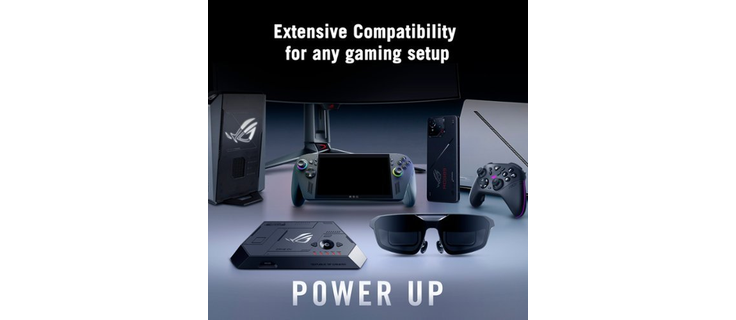
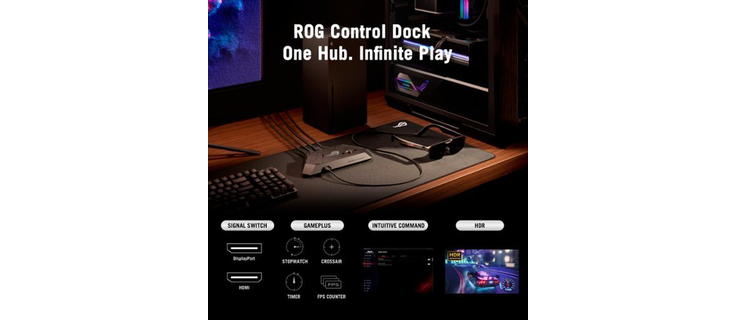
The R1 is designed for plug-and-play simplicity. It connects via a single USB-C cable supporting DisplayPort-alt-mode. This makes it natively compatible with a wide range of handheld PCs and mobile devices, including the ROG Ally, Xbox Ally, Steam Deck, and modern smartphones or tablets that support video output over USB-C. However, the true power of the R1 is unlocked with the included ROG Control Dock.
The dock acts as a central hub, adding two HDMI 2.0 inputs and one DisplayPort 1.4 output. This allows users to hot-swap between multiple sources, such as a PC, Xbox Series X|S, or PlayStation 5, without unplugging the glasses. For console gamers, this is a revolutionary addition, as it brings the high-refresh-rate, high-resolution experience of the R1 to the living room setup, effectively turning any TV screen into a portable cinema.
- ROG Ally / Xbox Ally: Direct USB-C connection, zero setup required.
- Steam Deck / Legion Go: Plug-and-play via USB-C to USB-C adapter.
- PlayStation 5 / Xbox Series X: Requires ROG Control Dock with HDMI connection.
- PC Laptops: Works with any laptop featuring a DisplayPort-over-USB-C port.
Comparative Analysis: R1 vs. The Competition
When evaluating the ROG XREAL R1, it is essential to understand where it sits in the broader market of spatial computing and smart glasses. The device occupies a unique niche that is distinct from full-fat standalone VR headsets and other augmented reality glasses.
Standalone vs. Tethered
Devices like the Samsung Galaxy XR ($1,799) and Apple Vision Pro M5 ($3,499) are spatial-computing devices with inside-out tracking, onboard compute, and hand-tracking capabilities. The ROG XREAL R1, by contrast, is a tethered display layer. It relies entirely on a host device for processing and tracking. While this means the R1 lacks standalone OS capabilities and hand-tracking, it offers a significantly lower price point and a much lighter form factor (3.2 ounces vs. hundreds of grams). It is the perfect choice for users who already own a powerful handheld PC or console and simply need a better display.
Direct Competitors
The most direct competitor is XREAL's own One Pro ($650). While the One Pro offers a similar 171-inch display and Bose audio, it caps out at 120Hz and lacks the ROG Control Dock. The R1's 240Hz panel and included dock justify the price premium for serious gamers. Other gaming-AR alternatives like the Viture Pro and Rokid Max are available at lower price points but have not yet matched the R1's combination of high refresh rate, Micro-OLED quality, and console compatibility.
| Feature | ROG XREAL R1 | XREAL One Pro | Apple Vision Pro M5 |
|---|---|---|---|
| Refresh Rate | 240Hz | 120Hz | 120Hz (varies by app) |
| Resolution | 1920×1080 per eye | 1920×1080 per eye | 4K per eye |
| Weight | 3.2 oz | ~3.2 oz | ~600g |
| Standalone? | No (Tethered) | No (Tethered) | Yes |
| Console Support | HDMI via Dock | Limited | No |
Who Is This Device For? Use Cases and Audience
The ROG XREAL R1 is not a one-size-fits-all device. It is engineered for a specific set of use cases and user profiles who prioritize performance and portability over standalone functionality.
The Handheld PC Gamer
The primary target audience includes owners of the ROG Ally, Xbox Ally, and Steam Deck. These users often face the limitation of small screens when gaming on the go. The R1 solves this by providing a massive virtual screen in any environment. Whether on a long-haul flight or in a cramped dorm room, the user can enjoy a 171-inch display that makes the handheld experience feel like a premium console setup.
The Console Enthusiast
Desktop and console gamers who already own a 240Hz monitor will find the R1 to be a portable equivalent. Using the ROG Control Dock, users can connect their PS5 or Xbox Series X to the glasses, creating a private gaming theater that travels with them. This is particularly valuable for travelers who want to maintain their gaming routine without the bulk of a TV or monitor.
The Productivity Power User
Beyond gaming, the R1 serves as a powerful productivity tool. Users can run multiple virtual windows for coding, spreadsheet analysis, or financial trading without needing to carry multiple physical monitors. The high resolution and color accuracy make it suitable for creative work, while the electrochromic dimming ensures visibility in various lighting conditions.
It is important to note that international availability can be complex. While the device is launching in the US, EU, and UK, markets such as the UAE, Hong Kong, and Australia may not have immediate local retail channels. In these regions, international customers can often source the product through specialized global retailers like Big Apple Buddy, ensuring access to this cutting-edge technology regardless of local distribution limitations.
What's in the Box and Warranty Details
Upon unboxing the ROG XREAL R1, users receive a comprehensive package designed to get them up and running immediately. The retail box includes the ROG XREAL R1 glasses, the essential ROG Control Dock, a high-quality USB-C cable, and a durable carrying case to protect the device during travel.
Accessories and Comfort
Recognizing that comfort is paramount for extended wear, the box includes three nose-pad sizes, allowing users to customize the fit for their face shape. A microfiber cleaning cloth is also provided to keep the Micro-OLED panels pristine. Additionally, a quick-start guide and warranty card are included to facilitate setup and registration.
Warranty and Support
ASUS and XREAL back the R1 with a 1-year parts-and-labor warranty. This coverage provides peace of mind for early adopters and ensures that any manufacturing defects are addressed promptly. The warranty covers the glasses and the control dock, though users should be aware that optional accessories like prescription lens inserts are sold separately and may have their own warranty terms.
For users in regions where official retail channels are delayed, such as parts of Asia or the Middle East, the warranty remains valid through the authorized distributor or import channel. It is always recommended to purchase from reputable sellers to ensure full warranty coverage and access to firmware updates.