The Honest Answer: It Depends Where You Live
The Google Pixel 11 launches August 12, 2026 — and Google will sell it officially in roughly 30 countries. If you live in one of them, buying locally is often the right call, and we'll say so plainly below. But if you're in one of the many markets Google skips — the Gulf states, Hong Kong, South Africa, and dozens more — importing the US model is usually the fastest way to get one in your hands.
We run an import service, so you'd expect us to tell you importing is always the answer. It isn't, and this guide is the full decision without the sales pitch: what an import actually costs once taxes land, whether the phone will work on your carrier, what happens to the warranty, how the gray market really behaves in the weeks after a Pixel launch, and — country by country — when importing beats buying locally and when it doesn't. Every country guide we publish for the Pixel 11 links back here, because these fundamentals don't change from market to market.
A framing note: Google announced the Pixel 11 on August 12, 2026, and this guide has been updated to match. Pricing and specs below are the confirmed figures — US pricing starts at $899 — alongside current tax rates. Preorders are open now and retail units ship from August 20.
Will It Work? Carrier Compatibility First
Before any price math, answer this question — a phone that can't make calls is an expensive paperweight at any discount.
The good news: unlocked US Pixels are strong travelers. They ship carrier-unlocked and cover the LTE and sub-6 5G bands used by major carriers across the Middle East, Europe, Asia, and Africa. One hard constraint to plan around, though: US-market Pixel 11, 11 Pro and 11 Pro XL units have no physical SIM tray at all — they are eSIM-only, holding two active eSIMs and up to eight stored profiles. Google made US Pixels eSIM-only with the Pixel 10 in 2025 and has kept it for this generation. The Pixel 11 Pro Fold is the only model in the line that still has a SIM slot. Non-US regional models keep the tray — but the US units are the ones that ship on launch day, and they are what we send. This isn't theoretical for us: we've shipped many US Pixel phones to customers in the UAE and Saudi Arabia — two markets with no official Pixel channel — and they've worked without a complaint pattern. Setup is therefore a scan, not a swap: you activate by scanning your carrier's eSIM QR code. Which makes one question worth asking your carrier before you order — not “is the phone unlocked?” (it is), but “will you issue an eSIM profile for an unlocked Pixel?” Nearly every major carrier in the markets we ship to will; the few that want you to walk into a store rather than tap through an app are the ones worth knowing about in advance.
The honest caveats:
- Band lists aren't official yet. Google publishes exact Pixel 11 band support on August 12. Leaked specs suggest the usual broad international coverage, but we'll update this section with the published list the same day.
- VoLTE provisioning is carrier-side. Some carriers only enable VoLTE for devices they've whitelisted. In countries that have retired 2G/3G entirely (the UAE completed its sunset at the end of 2025), VoLTE is how voice calls work — so a two-minute check with your carrier ("do you support VoLTE on unlocked Pixel devices?") is worth doing before you order. In markets that still run 2G or 3G fallback for voice, like Saudi Arabia, even a mis-provisioned phone still makes calls the old way.
- mmWave is a US thing. The US model's mmWave 5G is largely irrelevant abroad; what matters is sub-6 coverage, which is the standard configuration everywhere.
- Satellite SOS won't travel. Pixel satellite features work only in Google-supported countries, regardless of where the phone was purchased. Assume it won't work outside that list, and don't let a spec-sheet line item you can't use tip your decision.
The Real Math: Landed Cost, Not Sticker Price
The number that matters is the landed cost — what it takes to get the phone to your door:
US price + service fee + international shipping + your country's VAT/duties
Any import comparison that quotes you the US sticker price and stops there is selling you something. Using the $899 Pixel 11 base price, here's how the tax layer alone plays out in the markets we get asked about most (rates are current as of writing and applied to the declared value; your final quote itemizes everything before you pay):
| Country | Import tax load (approx.) | Notes |
|---|---|---|
| Hong Kong | 0% | No VAT or duty on phones |
| UAE | ~5% | 5% VAT only — phones are duty-free under GCC tariff heading 8517 |
| Saudi Arabia | ~15% | 15% VAT |
| Switzerland | ~8% | 8.1% VAT; import duties abolished |
| Norway | ~25% | 25% MVA |
| United Kingdom | ~20% | 20% VAT |
| South Africa | ~26% | 15% VAT on an uplifted customs value + ~9% luxury excise |
A concrete worked example: a $899 Pixel 11 headed to Riyadh carries roughly $135 in VAT, so you're at about $1,034 plus service fee and express shipping — call it launch-day hardware at a modest premium over US retail. The same phone headed to Hong Kong adds nothing in tax at all. Headed to Johannesburg, the ~26% load pushes past $1,130 before fees — which is exactly why our South Africa advice below isn't "import it."
On top of taxes, add our service fee and international express shipping — both quoted upfront when you see the Pixel 11 lineup, so there are no surprises at the door. The takeaway: in low-tax markets (Hong Kong, UAE, Switzerland) the landed cost stays close to US retail; in high-tax markets (Norway, South Africa) the tax layer does real damage, and you should weigh local options seriously.
Warranty and Support: The Real Trade-Off
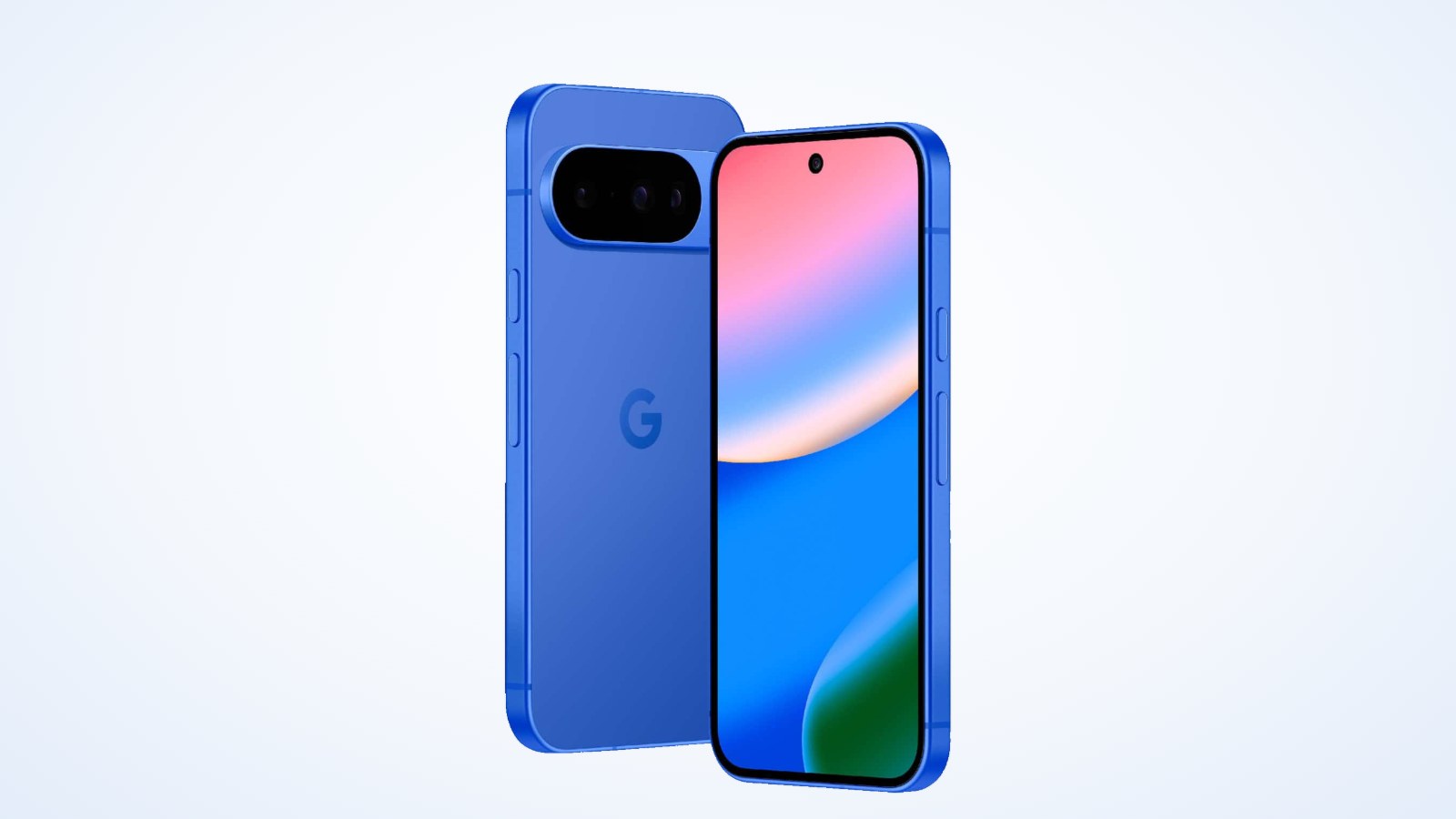
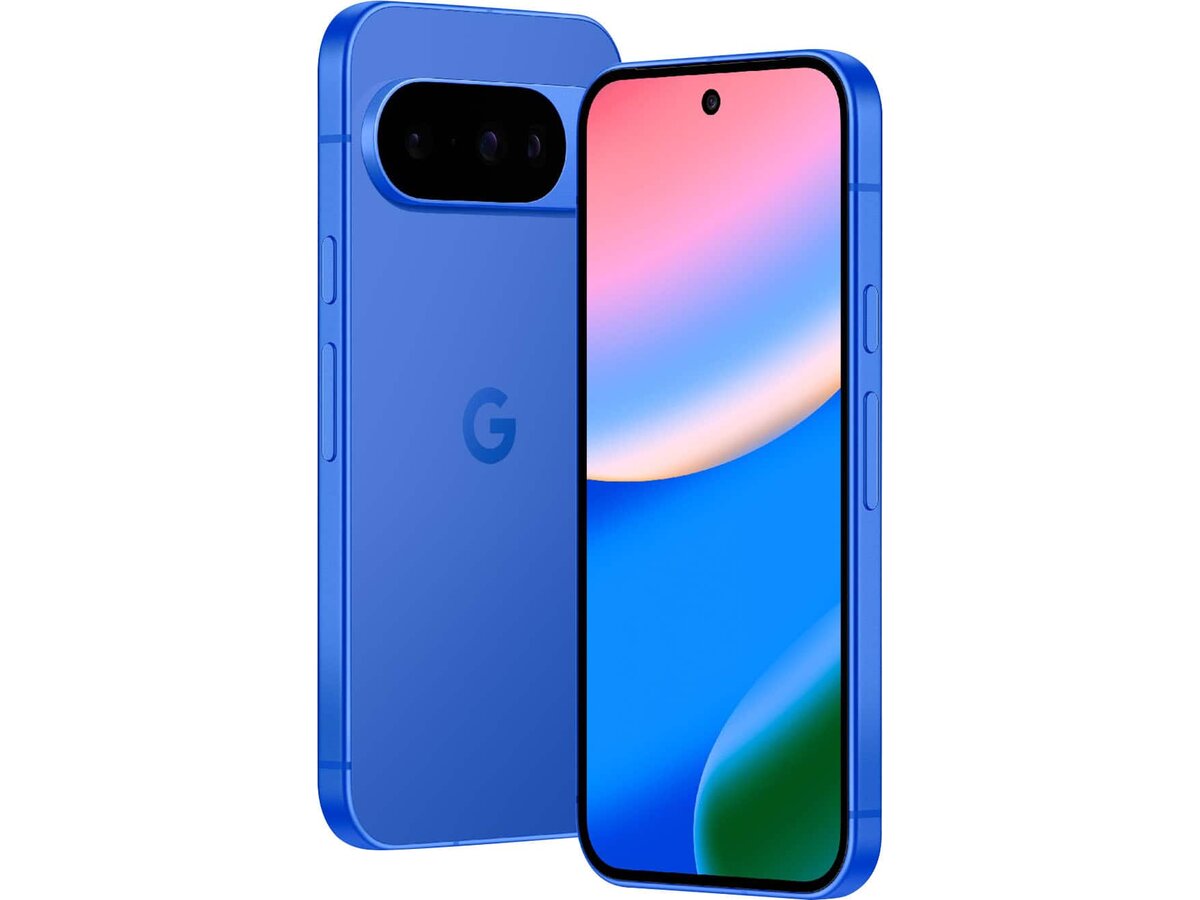
Pixel 10 shown — official Pixel 11 images arrive August 12.
Here's the part most import guides bury: Google's manufacturer warranty is honored in the country of purchase. Buy a Pixel 11 from a US retailer and warranty service runs through Google US — Google's local operation in your country (if there is one) won't repair it under warranty, and in the markets this guide is mostly for, there is no local Google operation anyway.
What that means in practice:
- For most people, nothing — the overwhelming majority of phones never make a warranty claim, and Pixel hardware failure rates are unremarkable either way.
- If something does go wrong, service means shipping the device to the US. Our team can assist with routing a return through our US address — slower than a local service center, but a real path rather than a dead end.
- Screen repairs and battery swaps can usually be handled by reputable independent shops locally, at prices similar to official service.
Worth noting: the local gray-market alternative doesn't fix this. A parallel-imported unit bought from a marketplace reseller carries the same country-of-purchase warranty limitation (it was bought in the US or another market too) — often with no clear paper trail at all. The warranty gap is a property of buying a Pixel in an unsupported market, not of buying it from us.
If a local warranty is a hard requirement for you, that's a legitimate reason to buy locally in an officially covered market — and we'd rather tell you that than have you find out later.
Import vs. Buying Locally — the Honest Comparison
If Google sells the Pixel 11 in your country, local purchase gets you local warranty, local returns, and day-one availability. For most covered markets — Germany, France, Canada, Singapore, and the like — that convenience is worth more than any modest price difference, and importing isn't worth it. One exception worth knowing:
- The Pro Fold wildcard: Google's foldable historically ships to far fewer countries than the main line — the Pixel 10 Pro Fold reached only about two-thirds of official Pixel markets. If the Pixel 11 Pro Fold skips your market, importing may be the only way to get one at launch. The official list lands August 12.
If Google doesn't sell there — Hong Kong, Saudi Arabia, the UAE, South Africa, and dozens of smaller markets — your local options are parallel importers and marketplace resellers (noon, Sharaf DG, Takealot, and the like). To be fair to them: once their stock arrives, prices often settle near US retail, and for a phone bought three months after launch they're a perfectly reasonable option. The catch is when and what:
- When: gray stock typically lands two to four weeks after launch, and the first waves carry a scarcity premium. Pixel launch cycles are short — by the time gray stock normalizes, the early-adopter window is over.
- What: configurations are whatever the importer happened to buy — often not the color or storage you wanted, and sometimes regional variants with different band tuning rather than the US model. Storage/color combinations like a 512GB Pro in a specific finish may simply never show up.
That's why the import case in these markets is mostly a launch-window case: order the US model at preorder, have it in hand around day one, in exactly the configuration you chose — at a landed cost that usually matches or beats what early gray stock sells for.
How Importing Through Big Apple Buddy Works
For readers new to the model, the mechanics are simple: you order on our site, we purchase the exact configuration from the US retailer the moment it's available, receive it at our US facility, and ship it to you by express courier with tracking. Taxes and duties are part of the quote conversation upfront — the numbers in the table above, applied honestly — so the price you agree to is the landed cost, not a teaser. For a launch like this one, the sequence that matters is: place your order now and your Pixel 11 leaves for your country as soon as US retail units ship on August 20. The Pixel 11 Pro Fold ships later, in October.
One honest note on timing: order-to-door depends on Google actually shipping on schedule. If US retail slips, imports slip with it — nobody's gray stock beats a phone that hasn't shipped anywhere yet. We keep you posted either way, including when the news is a delay.
Country-by-Country Quick Take
| Where you are | Our honest take |
|---|---|
| Saudi Arabia | Strong import case. No official channel; ~15% VAT keeps landed cost reasonable; day-one delivery beats waiting for gray stock. Also applies broadly to Bahrain and Kuwait. |
| UAE | Strong import case. No official channel, a light ~5% tax load (VAT only — phones are duty-free), and we've shipped many US Pixels there. Confirm your carrier will issue a VoLTE-enabled eSIM for an unlocked Pixel before ordering. Applies broadly to Qatar and Oman too. |
| Hong Kong | Import for speed, not price. Zero tax, but parallel importers reach US-parity pricing within days of launch. Worth it if you want day-one hardware in your exact configuration. |
| Switzerland | Officially covered — buy locally for most people. Importing makes sense mainly for a US-only variant or configuration; a low tax load (8.1% VAT, duties abolished) keeps an import's landed cost close to US retail. |
| Norway / UK | Officially covered — buy locally unless you're after a US-only variant, or the Pro Fold skips these markets (the August 12 list may change this row). |
| South Africa | Usually not worth importing — a ~26% combined tax load means local parallel stock on Takealot is often cheaper once it arrives. We'll ship if day-one matters to you, but we'd rather be straight about the math. |
| Australia / Japan | We don't recommend importing phones to these markets. Australian carriers block handsets that aren't certified for local emergency-call requirements, and Japan's radio law requires Giteki-certified devices. Buy locally — both are officially covered. |
We'll publish dedicated Saudi Arabia and UAE guides with carrier-level detail shortly — they'll link back to this page for the fundamentals.
The Bottom Line
Import the Pixel 11 if: you're in a market Google skips (the Gulf states, Hong Kong, and many more) and want launch-window hardware in your exact configuration, or the Pro Fold doesn't ship to your country.
Buy locally if: you're in a covered market and local warranty matters more to you than launch timing; you're in a high-tax market like South Africa where the landed cost doesn't work; or you're in Australia or Japan, where imported handsets face genuine regulatory problems.
If importing is your path, timing is everything: preorders open August 12, retail shipping is expected around August 20, and orders placed now arrive weeks ahead of local gray stock. All four models are open for order — and if you're still weighing which one to get, our living Pixel 11: everything we know guide has the full lineup, expected pricing, and specs.
We'll update this guide on August 12 with confirmed pricing, the official country list, and published band support.