How to Order the Unplugged UP Phone in South Africa
For tech-savvy consumers in South Africa seeking the ultimate in digital privacy, the Unplugged UP Phone represents a category of one. However, the reality of acquiring this device is distinct from buying a standard smartphone. The Unplugged UP Phone is not stocked by local retailers, nor is it available through major South African carriers like MTN, Vodacom, Cell C, or Telkom Mobile. Furthermore, Unplugged's direct US online store does not currently ship directly to South African addresses. This logistical gap can be a significant hurdle for buyers who want a genuine, new, and warranty-covered unit without the risks associated with grey market imports.
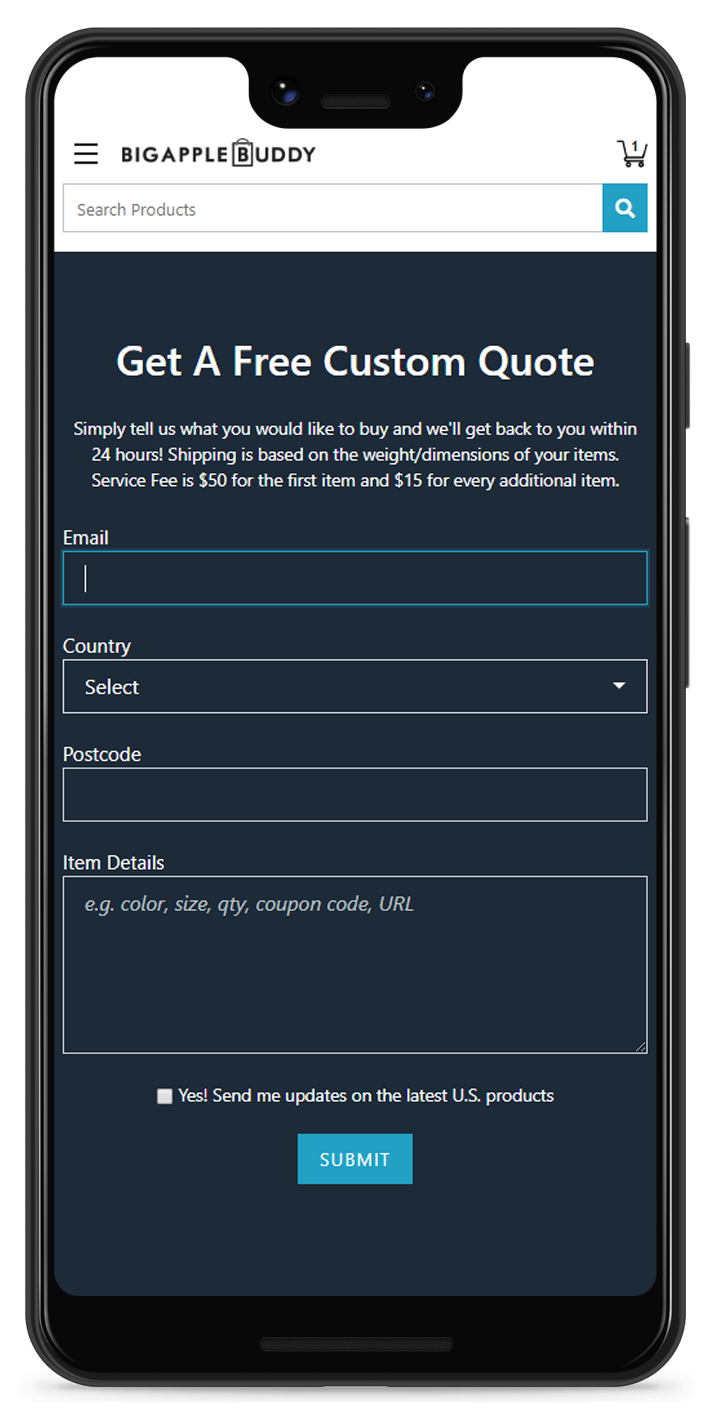
The most reliable and straightforward solution for South African buyers is to utilize a US-based personal shopping service like Big Apple Buddy. This service acts as your bridge between the US retail market and your doorstep in South Africa. By engaging Big Apple Buddy, you effectively create a local presence in the US. You provide them with your desired item (the Unplugged UP Phone) and your South African delivery address. They then purchase the device directly from Best Buy, ensuring you get the official US retail price and a valid US warranty receipt.
When you order through this method, the process is streamlined into three simple steps. First, you select the Unplugged UP Phone model you want (such as the Privacy Gray 256GB model) and provide your South African address to Big Apple Buddy. Second, they handle the procurement from Best Buy, paying the US sale price and processing the order. Finally, they arrange the international freight, handling all the necessary export documentation. This approach eliminates the need for you to travel to the US or rely on unreliable third-party resellers on platforms like eBay or Amazon. It ensures that the device is new, unopened, and shipped via a reputable courier network that is familiar with South African import protocols.
Why Personal Shopping is the Best Path
Choosing a personal shopping service like Big Apple Buddy offers distinct advantages over trying to find the phone through other channels. The primary benefit is the guarantee of authenticity. By purchasing directly from Best Buy, you avoid the risk of receiving a refurbished unit or a device with a compromised battery. Additionally, the service handles the complex logistics of international shipping. They consolidate the package and send it via express couriers like DHL, FedEx, or UPS. These couriers are experienced in clearing goods through South African Revenue Service (SARS) Customs, which significantly reduces the risk of your package being held or lost in transit.
This method also simplifies the payment process. Instead of trying to find a US credit card or navigating complex international payment gateways, you simply pay the service in your local currency or via a method they support. The service then converts the funds and pays the US retailer. This removes the friction of currency exchange fees often incurred by individual buyers trying to pay US merchants directly. It transforms a potentially frustrating cross-border transaction into a manageable, local experience.
Shipping Times and Delivery Logistics to South Africa
Once you have placed your order through Big Apple Buddy or a similar service, the next most pressing question is: how long will it take to arrive? Understanding the timeline helps you manage expectations and plan for the device's arrival. The shipping process from the United States to South Africa involves several stages, each contributing to the total transit time. Typically, the journey begins with the processing window at the US retailer. Best Buy usually requires 1–2 business days to process the order, pack the device, and hand it over to the shipping carrier.
After the package leaves the US warehouse, it enters the international transit phase. For South Africa, the most common and reliable carriers used by personal shopping services are DHL, FedEx, and UPS. These express international services are significantly faster than standard postal mail. The typical transit time for these couriers is roughly 3–10 business days, depending on the specific service level selected and current customs clearance speeds. While DHL and FedEx often offer the fastest delivery options, they also tend to be slightly more expensive. The speed of delivery is a critical factor for those who want their privacy device as soon as possible.
Customs Clearance and Courier Handling
Upon arrival in South Africa, the package must clear customs. This is where the experience of the courier matters immensely. Express couriers like DHL and FedEx have dedicated customs brokerage teams that handle the declaration process on your behalf. They will assess the declared value of the phone and calculate the applicable taxes and duties. Because the Unplugged UP Phone is an unlocked consumer electronic device, it typically falls under a 0% customs duty rate under South African tariff schedules. However, it is subject to Value Added Tax (VAT).
Most courier services will contact you once the package arrives in South Africa to collect the import taxes. If you have pre-paid these taxes through your shopping service (a feature often called DDP or Delivered Duty Paid), the courier will simply deliver the package. If not, you will need to pay the tax directly to the courier before they release the package to you. This payment is usually made via credit card or EFT. The entire customs clearance process with a reputable courier usually takes 1–3 business days after the package lands in South Africa. Therefore, a realistic total delivery timeline is 5–14 business days from the time you place your order in the US to the moment the phone is in your hands in Johannesburg, Cape Town, Durban, or anywhere else in the country.
AVAILABLE FROM BIG APPLE BUDDY
Unplugged UP Phone
We buy it in the U.S. and ship it to your door in 75+ countries.
BUY THIS NOW
Total Cost Breakdown: US Price, Shipping, and South African Taxes
Understanding the total landed cost is essential for any international buyer. The price you see on the Best Buy website is only the starting point. To get a realistic budget for the Unplugged UP Phone in South Africa, you must factor in the international shipping fees, the cost of the personal shopping service, and the import taxes levied by the South African government. The device is a premium privacy tool, and while the US sale price is attractive, the final cost will be higher due to these additional layers of expense.
Let's break down the costs for the popular Privacy Gray 256GB unlocked model. The current Best Buy sale price is approximately US$689, with a standard MSRP of US$989. Using an approximate exchange rate of 18.5 ZAR per USD, the base phone cost is roughly R12,746 (on sale) or R18,296 (at MSRP). This is the foundation, but the real cost involves the logistics.
International shipping via express courier (DHL, FedEx, UPS) typically costs between US$40 and US$80, depending on the weight and service speed. This translates to roughly R740 to R1,480. In addition, you will need to pay the South African government 15% VAT on the CIF value (Cost, Insurance, and Freight). This VAT is calculated on the sum of the phone's value, the shipping cost, and insurance. For a phone valued at US$689 plus shipping, the VAT will be approximately R2,400 to R2,600. Finally, the personal shopping service like Big Apple Buddy charges a fee for their service, which varies but is generally a small percentage of the item value or a flat fee.
| Cost Component | Estimated Cost (ZAR) | Notes |
|---|---|---|
| Base Phone Price (Sale) | R12,746 | Based on US$689 at 18.5 rate |
| Express Shipping | R740 – R1,480 | DHL/FedEx/UPS Express |
| 15% VAT (Approx.) | R2,400 – R2,600 | On CIF value + shipping |
| Service Fee (Est.) | R500 – R1,000 | Varies by provider |
| Total Estimated Cost | R16,386 – R17,826 | Before any service fees |
It is important to note that these figures are approximate. The final tax amount depends on the exact declared value and the current exchange rate at the time of import. However, this breakdown gives you a clear picture of what to expect. The total landed cost will be meaningfully higher than the headline US price, but it remains competitive given the device's niche status and lack of local alternatives.
Network Compatibility, Warranty, and Local Alternatives
Once your Unplugged UP Phone arrives in South Africa, the immediate concern for most users is whether it will work seamlessly with local networks and services. The good news is that the UP Phone is sold fully unlocked, designed for global use. It supports 2G, 3G, 4G LTE, and 5G networks, making it compatible with all major South African networks including MTN, Vodacom, Cell C, and Telkom Mobile. For most users, 4G LTE connectivity will be perfectly sufficient for daily tasks, browsing, and streaming.
For those specifically interested in 5G, it is important to understand the band compatibility. South African 5G networks primarily operate on the n78 band (3.5 GHz), with secondary coverage on n8 (900 MHz) and n28 (700 MHz). The UP Phone supports these bands, ensuring you can access 5G speeds where available. However, if 5G is a critical requirement, it is always wise to verify the specific band support with Unplugged before finalizing your purchase. The device also supports both nano-SIM and eSIM, giving you flexibility in how you connect to your carrier.
Warranty and Banking App Compatibility
One of the trade-offs of buying a privacy-focused device internationally is the warranty process. Unplugged's standard warranty is honored by the manufacturer, but it is not serviced locally in South Africa. If you encounter a hardware defect, you will typically need to ship the device back to the US for service (RMA). This means factoring in round-trip shipping costs and time if a repair is ever needed. It is a risk to consider, though Unplugged's build quality is generally robust.
A more immediate practical concern is software compatibility. The UP Phone runs on LibertOS, a de-Googled Android variant. While this offers superior privacy, it means that apps requiring Google Mobile Services (GMS) will not work out of the box. This is a critical consideration for South African users who rely on specific banking apps like those from Standard Bank, FNB, or ABSA, or payment services like SnapScan and Zapper. Many of these applications hard-require Google Play Services to function securely. While sideloading is possible, it is not universally supported and can be unstable. Before purchasing, you must verify if your essential banking and payment apps are compatible with LibertOS or if you need to find alternative solutions. This is the most important real-world compatibility check for South African buyers.