The Short Answer, Now That Both Phones Are Real
Google announced the Pixel 11 on August 12, 2026. Preorders are open, retail units ship on August 20, and the Pixel 11 Pro Fold follows in October. So this comparison no longer runs on leaks — it runs on published specs and prices, which changes the answer in a few places the pre-launch rumours got wrong.
The short version: the Pixel 11 is a chip-and-processing generation, not a hardware redesign. On the base model the display, the ultra-wide, the telephoto lens and the selfie camera are carried over unchanged from the Pixel 10. What actually moved is the Tensor G6, a physically larger main sensor, faster wireless charging, and a body that is thinner at the camera bar and about 8g lighter. On the Pro and Pro XL the camera story is bigger — 120x Pro Zoom, a brighter 3,600-nit display and a new 48MP telephoto.
Whether that is worth your money depends almost entirely on which phone you are holding right now, so this guide is organised that way. For the full confirmed spec sheet across all four models, our Pixel 11 price and specs guide has the complete list.
What Actually Changed on the Base Model — and What Didn't
Comparisons at launch tend to list every spec and let you sort it out. Here is the shorter, more useful version: the table below only shows the lines where the Pixel 11 and Pixel 10 actually differ.
| What changed | Pixel 10 | Pixel 11 |
|---|---|---|
| Chip | Tensor G5 (3nm) | Tensor G6 (TSMC 2nm) |
| Main sensor | 48MP, 1/2.0" | 48MP, 1/1.56" — 56% more light |
| Zoom ceiling | 5x optical | 5x optical, 30x Super Zoom |
| Wireless charging | Qi2, 15W | Qi 2.2, 25W |
| Weight | 204g | 195.6g |
| Camera bar | — | 40% thinner |
| Storage | 128GB / 256GB | 256GB / 512GB |
| Android at launch | Android 16 | Android 17 |
And here is what did not change on the base model, which is the part worth sitting with: the same 6.3-inch 1080 × 2424 OLED at 60–120Hz, the same 13MP ultra-wide, the same 10.8MP 5x telephoto lens, the same 10.5MP selfie camera, the same 12GB of RAM, and a battery that went from 4,970mAh to 4,985mAh — a 15mAh difference, which is nothing. Both phones get seven years of OS, security and Pixel Drop updates.
That is a genuinely narrow list of hardware changes. The Pixel 11's gains are real, but most of them are delivered by the chip and the sensor behind an otherwise familiar phone.
Where the Pixel 11 Genuinely Pulls Ahead
Four upgrades survive scrutiny:
- Tensor G6, and specifically its efficiency. Google's published figures are 25% faster web browsing and 15% quicker app launches than the G5, plus 50% more TPU compute. The number that matters most for a Pixel, though, is the AI one: on-device Gemini Nano tasks run up to 3.5× faster while using up to 3.5× less energy. Heat and battery drain have been the Tensor line's chronic weakness, and a move from 3nm to TSMC's 2nm process is the first architectural answer to it.
- A physically bigger main sensor. The megapixel count is unchanged at 48MP, which makes this easy to skim past — but the sensor grew from 1/2.0" to 1/1.56", which is where Google's "56% more light sensitivity" claim comes from. Bigger sensors help most in exactly the conditions phone cameras are worst at: indoors, at dusk, and anywhere you would otherwise trigger Night Sight.
- 30x Super Zoom on the base model. The 5x telephoto lens is the same glass as the Pixel 10's; the reach beyond it is the G6 doing the work. Treat this as a processing feature and judge it on real photos, not the number.
- Qi 2.2 at 25W. Wireless charging goes from 15W to 25W, on the same magnetic Pixelsnap alignment the Pixel 10 introduced. If you charge on a stand rather than a cable, this is the change you will actually feel day to day.
On the Pro and Pro XL the case is stronger. The Pro models get a new main sensor, a 48MP telephoto with 30% more light sensitivity, Portrait Mode at 5x, Night Sight that captures up to 4.5× faster, and Pro Zoom to 120x. The Super Actua display goes to 3,600 nits peak with more than double the scratch resistance of the Pixel 10 Pro, and the Pro XL charges to a claimed 15 hours of battery in 15 minutes on a 45W wired charger. If you were choosing between generations at the Pro tier, that is a real spec gap rather than a chip swap.
One honest caveat that most launch coverage skipped: battery capacity went down across the Pro line. Pixel 11 Pro is 4,850mAh against the 10 Pro's 4,870mAh; Pro XL is 5,115mAh against 5,200mAh; and the Pro Fold drops from 5,015mAh to 4,750mAh. Google is betting the G6's efficiency more than covers it. That is a plausible bet and probably a correct one — but it is a bet, and independent battery testing after August 20 is what settles it.
The Case for the Pixel 10 — and Why It's Weaker Than You'd Expect
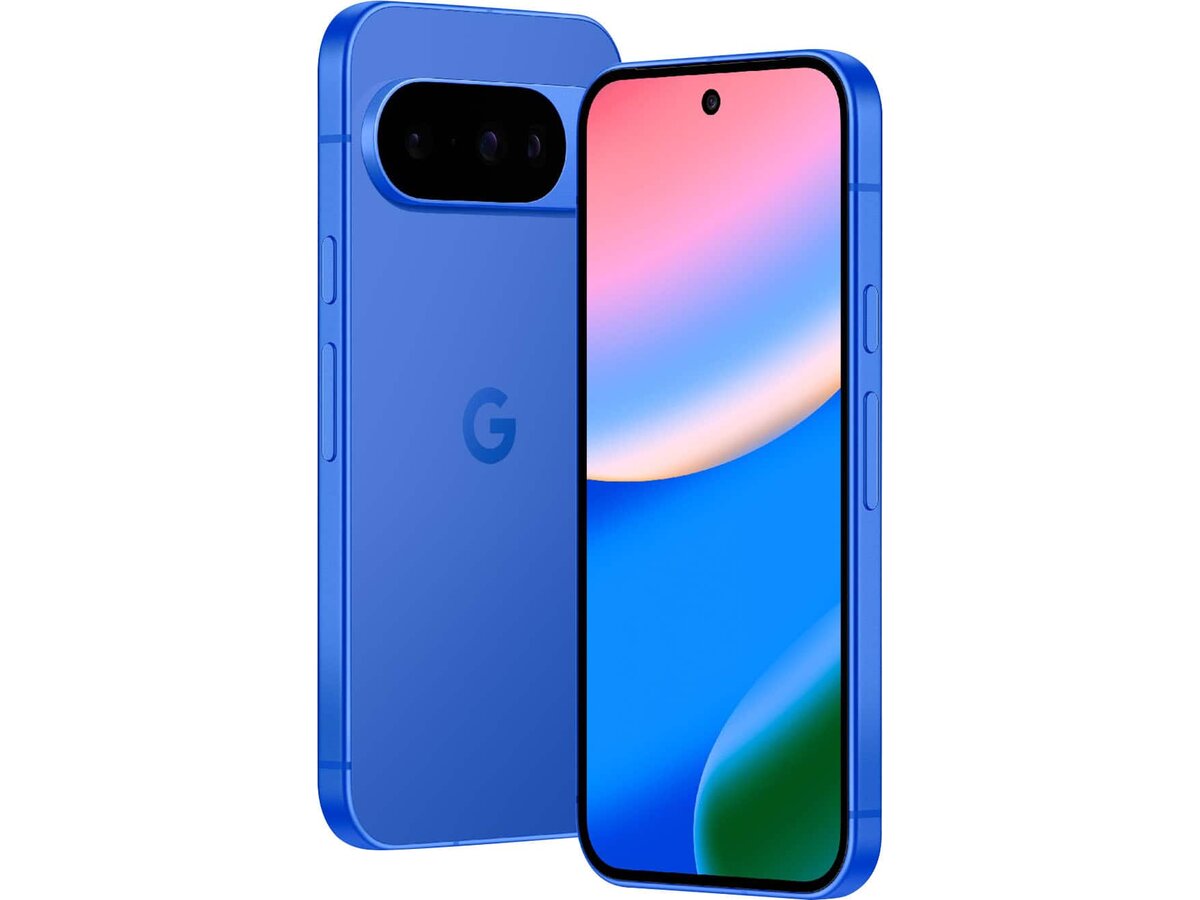
Pixel 10 in Indigo.
The standard launch-week advice is to buy last year's phone at a discount. We checked, because we buy these units ourselves: as of writing, the unlocked Pixel 10 has not been discounted at all. Best Buy still lists it at its original $799 (128GB) and $899 (256GB), the Pixel 10 Pro at $999 and $1,099, and most colours and storage tiers are already showing as out of stock rather than on sale. Carrier-locked units are discounted — but a carrier-locked phone is the wrong purchase if you are importing.
That single fact reshapes the comparison, because the discount everyone is waiting on is the entire argument for the older phone. Here is how it lands:
- If you own a Pixel 10: hold. You would be paying full price to change the chip, gain a larger main sensor and faster wireless charging, and keep the same display and the same zoom lens. That is a want, not a need. The one scenario that flips it is if independent reviews after August 20 show the G6's efficiency gains are dramatic in practice — wait for those, then decide.
- If you're buying your first Pixel, or coming from another brand: at today's prices, buy the Pixel 11. A 256GB Pixel 10 and a 256GB Pixel 11 both cost $899, and at the same money the newer phone wins on every line that differs. The Pixel 10 only becomes the value play once it is genuinely discounted, and it is worth knowing that last generation's unlocked stock tended to sell through rather than go on sale.
- If you're on a Pixel 8 or older: go Pixel 11. Two chip generations, double the base storage, a materially larger main sensor and a fresh seven-year update clock all stack, and none of it is marginal at that distance. This is the group the upgrade case is unambiguous for.
A note on the update runway, since it is often quoted loosely: both phones carry seven years of OS, security and Pixel Drop support. The Pixel 11's clock simply starts a year later. That is worth one year, not a category difference.
The Price Question Most Comparisons Get Wrong
You will read that the Pixel 11 costs $100 more than the Pixel 10. That is true of the entry price, and it is mostly false tier-for-tier — except on one model, where it is exactly true. Unlocked US pricing, side by side:
| Model and storage | Pixel 10 | Pixel 11 |
|---|---|---|
| Base — 128GB | $799 | Discontinued |
| Base — 256GB | $899 | $899 |
| Base — 512GB | Not offered | $1,019 |
| Pro — 128GB | $999 | Discontinued |
| Pro — 256GB | $1,099 | $1,099 |
| Pro XL — 256GB | $1,199 | $1,299 |
| Pro XL — 512GB | $1,319 | $1,419 |
Three things fall out of that table:
- The base model and the Pro did not get more expensive. At 256GB both cost exactly what they cost last year. The entry price rose only because the 128GB configuration was retired across the line.
- The Pro XL genuinely did go up — $100 at every shared tier. It is the one model in the lineup where you are paying more for the same amount of storage, and it is worth knowing that before you assume the increase is uniform.
- If 128GB was what you wanted, the cheapest Pixel now costs $100 more. That is a real increase for the buyer at the bottom of the range, and no amount of tier-matching makes it go away.
Worth naming as a genuine upside: 256GB as a floor is the most useful change in the lineup for anyone who shoots video. A 128GB phone fills up in about a year at current photo and video sizes, and the usual escape hatch — a microSD card — has not existed on a Pixel for years.
If Google Doesn't Sell the Pixel in Your Country
One variable spec-sheet comparisons ignore entirely: in a number of countries — Saudi Arabia, the UAE, Hong Kong and others — Google does not sell the Pixel at all. No Google Store, no local launch, for the Pixel 11 or the Pixel 10.
If that is you, the vs-question changes shape. Local marketplace stock arrives weeks after launch, in whatever configurations parallel importers happened to buy, and often only in the base colour. Importing the US model is the fastest way to get a Pixel 11 — ordered now, in the exact storage and colour you want, shipping as soon as US retail units move on August 20. The honest costs, the landed-price maths and the warranty position are covered in our complete Pixel 11 import guide, with country-specific guides for Saudi Arabia and the UAE.
One hard constraint to check before you order either generation: US-market Pixel 11, 11 Pro and 11 Pro XL units have no physical SIM tray at all. They are eSIM-only — two eSIMs active, up to eight stored. This is not new with the Pixel 11; Google made US Pixels eSIM-only with the Pixel 10, so it applies to both phones in this comparison. The Pixel 11 Pro Fold is the only model in the line that still has a SIM slot. Ask your carrier one question before you buy: will they issue an eSIM profile for an unlocked Pixel? Nearly all of them will — it is worth the five minutes to confirm rather than discover.
Two disclosures we always make: Google's warranty is honoured in the country of purchase, so a US-bought unit is serviced through the US (we can assist with routing), and satellite features such as Satellite SOS only work in countries Google officially supports, wherever the phone was bought.
The Bottom Line
On a Pixel 10? Hold. You would pay full price for a chip generation, a larger main sensor and faster wireless charging, on the same screen and the same zoom lens. Wait for independent battery testing after August 20 — if the G6's efficiency claims hold up dramatically, revisit it then.
On a Pixel 8 or older? The Pixel 11 is the upgrade. Two chip generations, 256GB as standard, a bigger main sensor and a fresh seven-year support clock — none of that is marginal from where you are standing.
Buying your first Pixel? Buy the Pixel 11. The advice to take last year's phone at a discount only works when there is a discount, and right now the unlocked Pixel 10 is still at full price with stock thinning. At $899 either way, take the newer chip and the bigger sensor.
Want the Pro camera? That is where the generational gap is genuinely wide — 120x Pro Zoom, a 48MP telephoto, Portrait at 5x and a 3,600-nit display are not things the Pixel 10 Pro does. Just note that the Pro XL is the one model that costs $100 more than its predecessor at matching storage.
And if you are in a country Google skips, the phone you want in the configuration you want is an import story either way. All four Pixel 11 models are open for order with us now: the Pixel 11, 11 Pro and 11 Pro XL ship from August 20, and the Pro Fold follows in October.